Archive | Uncategorized RSS feed for this section

A Visit Home

6 Jun
Salemme bungalow 1 6-6-13

Habitat for Humanity supervisor Peter Salemme amid bungalow renovation.

            Forearms coated with sweat and sawdust, Peter Salemme walked me through the renovation in progress – a bungalow tucked at the bottom of a hill in Tuscaloosa’s Alberta City neighborhood.

            Above him, through the rafters of the roof to come, young men from a variety of northern Mennonite churches clambered and hammered.

“You know how every group of people has a joke about how many of them it takes to screw in a light bulb?” Peter asks. I nod.

“Well, the Mennonite version of that joke is, ‘How many Mennonites does it take to … oh, wait, it’s done already.’ “

He gestured to the half of the roof already installed.

“They put all that up yesterday.”

Mennonite at work on bungalow roof.

Mennonite at work on bungalow roof.

They’ll need to keep up that pace, since they hope to have the renovation complete by June 20th, the birthday of homeowner Willie Bishop.

Willie, a Korean War veteran, not only has lived in the bungalow – he in fact built it, some 65 years ago, when he was a young man of 20. Then, over the years, as Peter put it, “Mother Nature started to take over.”

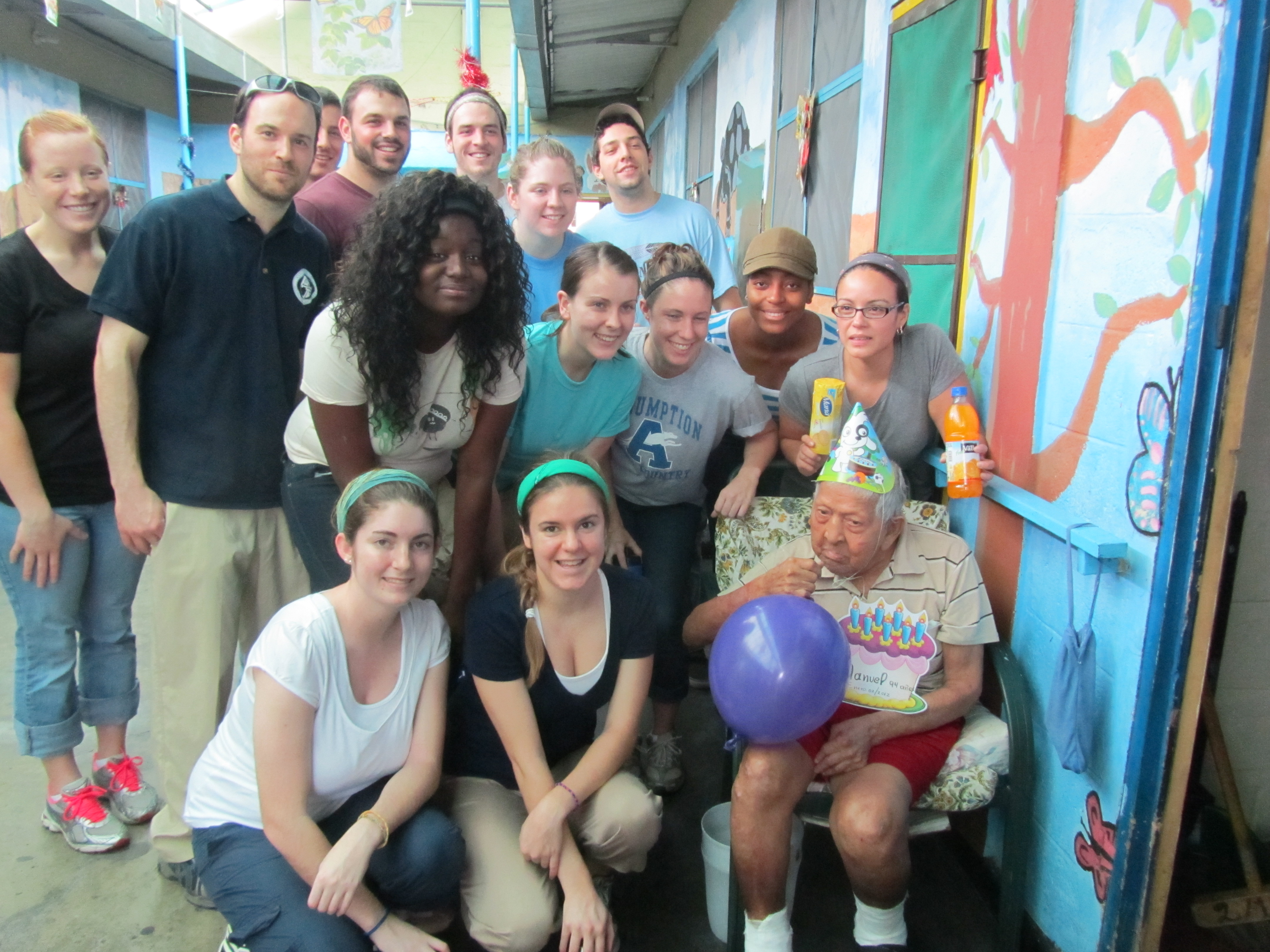
While the renovation is not related to the April 27, 2011 tornado that killed 54 people in my hometown, it’s at the edge of the path of destruction – and not far from where, back in January, Assumption College students helped build a row of homes with Peter and others from Habitat for Humanity Tuscaloosa. (The school will return for a third year come January.)

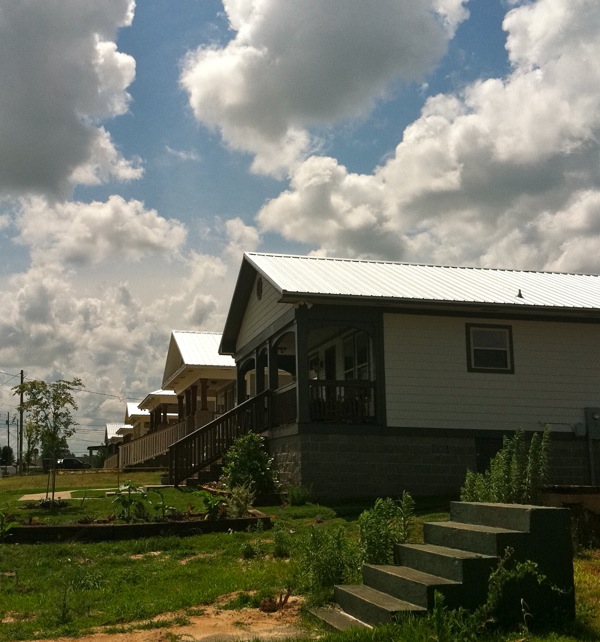
The day before calling on Salemme and company, I had in error sought him at the old locale – only to find the row of homes complete, the only humans in evidence two kids sitting on their front porch steps – the youngest of which told me of hiding in the closet during the twister.  The homes felt new, yet the yards already green,  with saplings planted in several yards. Looking back the other way, across the oddly open, empty land stretching from their yards to University Boulevard, it was easier to imagine a day when that view would be blocked by rows of such homes, occupied by people who need them most

But for now, there’s a birthday party to get ready for.

Habitat row 1 6-5-13

Heroic Journeys: Mordor, the Shire, and Kermit, West Virginia

20 Apr
Frodo Baggins (Elijah Wood) and the ring he must bear.

Frodo Baggins (Elijah Wood) and the ring he must bear.

EDITOR’S NOTE: Only six days and yet seemingly a lifetime ago, before the tragedy of Patriots Day plunged our community into shock and outrage, the youth of First Unitarian Church led a Sunday morning service that explored the heroic battle between good and evil in more of a literary context. The service, titled “The Quest for Peace – A Hero’s Journey,” explored the phases of the heroic journey from the “call to adventure” – including stepping outside one’s comfort zone to experience something new and, hopefully, transformative – to the challenge of returning home after this transformation, all in the context of humble hobbit Frodo Baggins in J.R.R. Tolkien’s The Lord of the Rings trilogy.

As part of the service, the youth distributed rings to the congregation, which we then got to toss into a sculpted volcano. (I assume none of them were heirlooms.) One part of this intriguing service, well-planned and performed, was a reflection by Olivia Mandile – which seemed to touch on some of the same concerns as two recent guest blogs by Assumption students Marie Ebacher and Colleen Putzel. The notion of service as an adventure which calls one outside one’s normal life and self – and the challenge of what to internalize after the adventure is over – runs through all three pieces. Please enjoy Olivia’s below.

As teenagers growing up in a sleepy little area, my friends and I are always talking about growing up and going on adventures. We spend a lot of time talking about the future: summer, college, the careers we want. But as John Green wrote in his novel, Looking for Alaska, “Imagining the future is a kind of nostalgia. We use the future to escape the present.”

So often we expect adventure to come knocking on our doors, as it did for Frodo Baggins in The Fellowship of the Ring. We expect adventure to be loud, big, and staring us straight in the face. But when it arrives on our front doorstep, we are often too caught up in what may happen years from now that we do not even recognize it.

I went on my first great adventure in my sophomore year of high school. I travelled, with nineteen of my peers, to the poverty-stricken town of Kermit, West Virginia, where the unemployment rate is a staggering 22% and many people live in trailers with nothing but cardboard for walls. I spent the week painting a house for a family that could not afford paint, tutoring children in a day care center that did not even have a playground, and caring for abandoned puppies.

The parts of my trip that affected me most deeply were the stories I heard from the people living in Kermit. My peers and I had the opportunity to talk to inhabitants of the town, who shared their lives willingly with us. We heard about the medical bills they could not pay, the times they could not go to work because they did not have gas money, the worries of a teenage girl who saw classmate after classmate drop out of high school because of another teenage pregnancy. These were all things I heard about on TV or on the Internet, but I had never met anybody whose life was wracked with so much worry.

Olivia Mandile (left) sharing good times on West Virginia mission trip.

Olivia Mandile (left) sharing good times on West Virginia mission trip.

If you could have heard the stories I heard in Kermit, you probably would have expected the town to be downtrodden and sad. But that week, I met some of the happiest people I have ever had the pleasure to talk to. The people of Kermit have so many reasons to worry about the future. Most of them do not know how long they will have jobs for, or if the cardboard on the sides of their trailer will keep them warm in the winter. They truly live, however, only for the present. I have spent the majority of my life waiting for something, anything, to happen. I can’t say that since my trip to Kermit, I have always lived in the present moment. However, when my mind wanders back to Mingo County and West Virginia, as it often does, I remember to take a deep breath and count my blessings. My journey to Appalachia taught me about poverty in our nation, but more than that it taught me to stop wishing for the future and start finding adventures in my everyday life.

In The Lord of the Rings trilogy, Frodo becomes so fixated on the end result of his journey that the future essentially destroys him. By the time his mission is over, he is unable to return home and function as he was previously able to. His inability to live in the present ensured that he cannot live in the Shire. Frodo’s adventure was not only about destroying the ring. It was also about friendship, acceptance of other people, bravery, and justice. However, while his best friend Sam was able to clearly see this, Frodo was not.

Most of us are not very good at living in the present. The future holds an interminable excitement that makes the mundaneness of everyday life bearable. But then again, when does the future actually arrive? By the time the next moment comes it is already the present, and before we even have time to notice it, is has become the past, which is never worth dwelling on.

Instead of waiting for the next big thing in my life to arrive, I am trying very hard to find excitement and adventure in the present moment: an enlightening conversation with a good friend, a poem that resonates with me, a night of playing board games with my family. There is always something great looming on the horizon, but I do not want to miss the millions of moments that will arrive before it. And, besides, perhaps the greatest adventure of all is the love of my friends and family.

Senegal and After

24 Mar
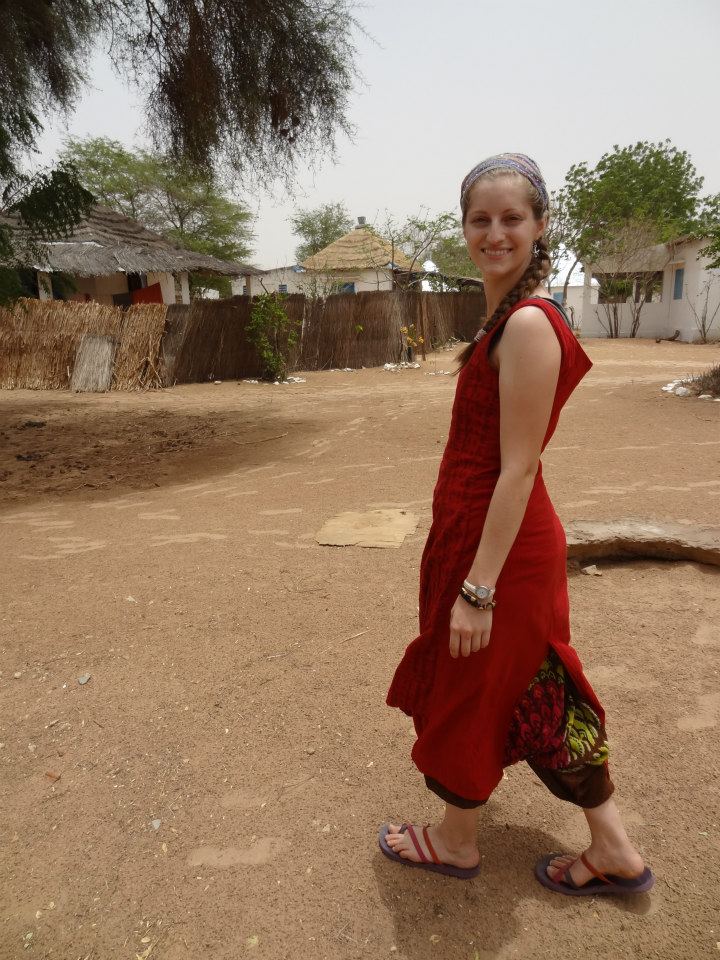
Marie Ebacher at commune in Senegal.

Marie Ebacher at commune in Senegal.

          EDITOR’S NOTE: Marie Ebacher has had a busy week. On Thursday the Assumption College senior accepted the George A. Doyle Merit Award for Excellence in Economics or Global Studies; then she was back in rehearsals as the puppeteer inside Audrey II, the man-eating plant that’s the star of The Little Shop of Horrors. But Marie, a Global Students and French double-major with a minor in Peace and Conflict Studies, is used to being busy – and somehow she manages to keep an eye on the bigger picture. In her Doyle acceptance speech, she took time to remind the audience that it was International Children’s Peace Day; meanwhile, she’s giving part of her Doyle award to African Community Education in Worcester, which she credits for nudging her further down the road that, two years ago, led her to study abroad in Senegal – a place she wishes to return to if she receives a Fulbright, for which she is a finalist.

        Naturally, given her role in Little Shop, she hopes to study street puppetry in Senegal. Amid all this, she was kind enough to reward my request for a piece about re-entry – the transition from the mountain top to life back home. Her piece is below.

Curled up next to the campfire, I was silent. I had never experienced a silence like this. My eyes were not fixated on the flames or the embers. I had seen too much fire the last six months.

What I couldn’t take me eyes off of was the aluminum coke can. The squealing sounds reverberated in my ears, as if a megaphone was pressed up to the side of my head. I watched as the flames choked out invisible toxic gases and the can suffered a slow death. Fireworks were lighting up the sky in the distance but my gaze remained unbroken.

I left the Fourth of July party and went to bed without telling my friends. Cocooned in my sleeping bag, I wept. The old me would have said It’s just one can, Marie. But this new me lashed out and felt disgusted that I call this country home.

I felt like screaming at the person who threw that can into the fire, “Do you know that in Senegal there is no trash day? No public dumps? No recycling? Of course you don’t, you ignorant fool! If you did you would have thought twice before you had some fun by throwing that can into the fire. In Senegal they have no other option but to burn their trash. They burn it all until the streets fill with flames.”

Upon returning to the United States from Senegal, many things had changed. For the past six months I had grown accustomed to showering out of a bucket, spending hours washing all my clothes by hand, reducing my waste to almost nothing. I was bombarded with daily images of poverty and learned what it was like to live on the bare minimums. Life was tough, but it was beautiful. I never smiled or laughed so much. To this day, my time living in a rural village in Senegal was what I would consider the best time of my life.

Eventually I overcame this post-traumatic stress that caused me so much anxiety and anger during the months following my return home. But its effects still linger. I find myself getting twitchy when my brother runs the water in the sink and feel uncontrollable guilt over any purchases that would not be considered necessities for survival. I have learned to appreciate my home again, but it is not the same type of appreciation I felt before and I do not think it ever will be.

Part of my heart has remained in Africa. When I begin to stray from what Senegal taught me, about the true joie de vivre, I feel a tug in my chest. It is my reminder to not forget where I come from or where I have been. It tells me to turn my anger into something productive and to love when I feel hate.

But do not fear. This loss of a piece of one’s heart is nothing permanent. It is like the tale of the Grinch. In the place of the missing puzzle piece, a heart will grow three sizes bigger.

Marie as Audrey II. (Rick Cinclair, Worcester Telegram.)

Marie as Audrey II. (Rick Cinclair, Worcester Telegram. )

Loustaunau Meets Lang

22 Mar
Art by Chronicle's Brian Taylor.

Art by Chronicle’s Brian Taylor.

Jim Lang’s column on Esteban Loustaunau and his community service learning course ran Friday in the Chronicle of Higher Education.

Esteban, who teaches Spanish at Assumption College, designed a labor-intensive project two years ago which invited immigrant students at TRA Inc. to take photos of local places that somehow represented America and/or Worcester to them. He then worked, along with the Community Service Learning program, to mount an exhibit of their work.

Once you’ve read Jim’s fine column, feel free to visit my blog entry, including photos, on the event in February of 2012.

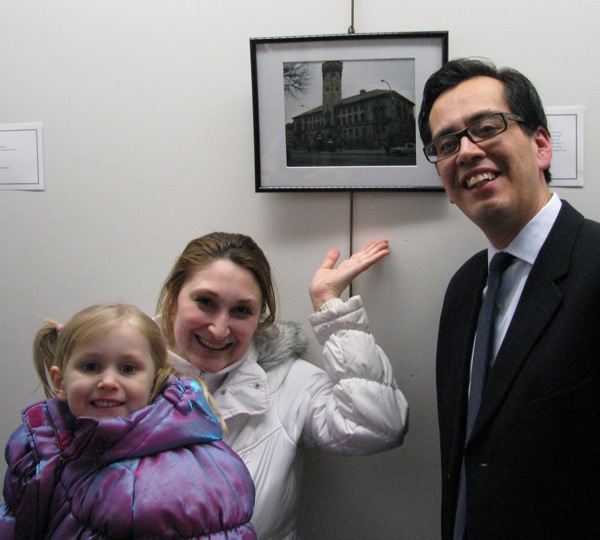
Elena and daughter with Esteban with her photo at February 2012 exhibit.

Elena and daughter with Esteban with her photo at February 2012 exhibit.

Water Bottles and Consumerism

17 Mar
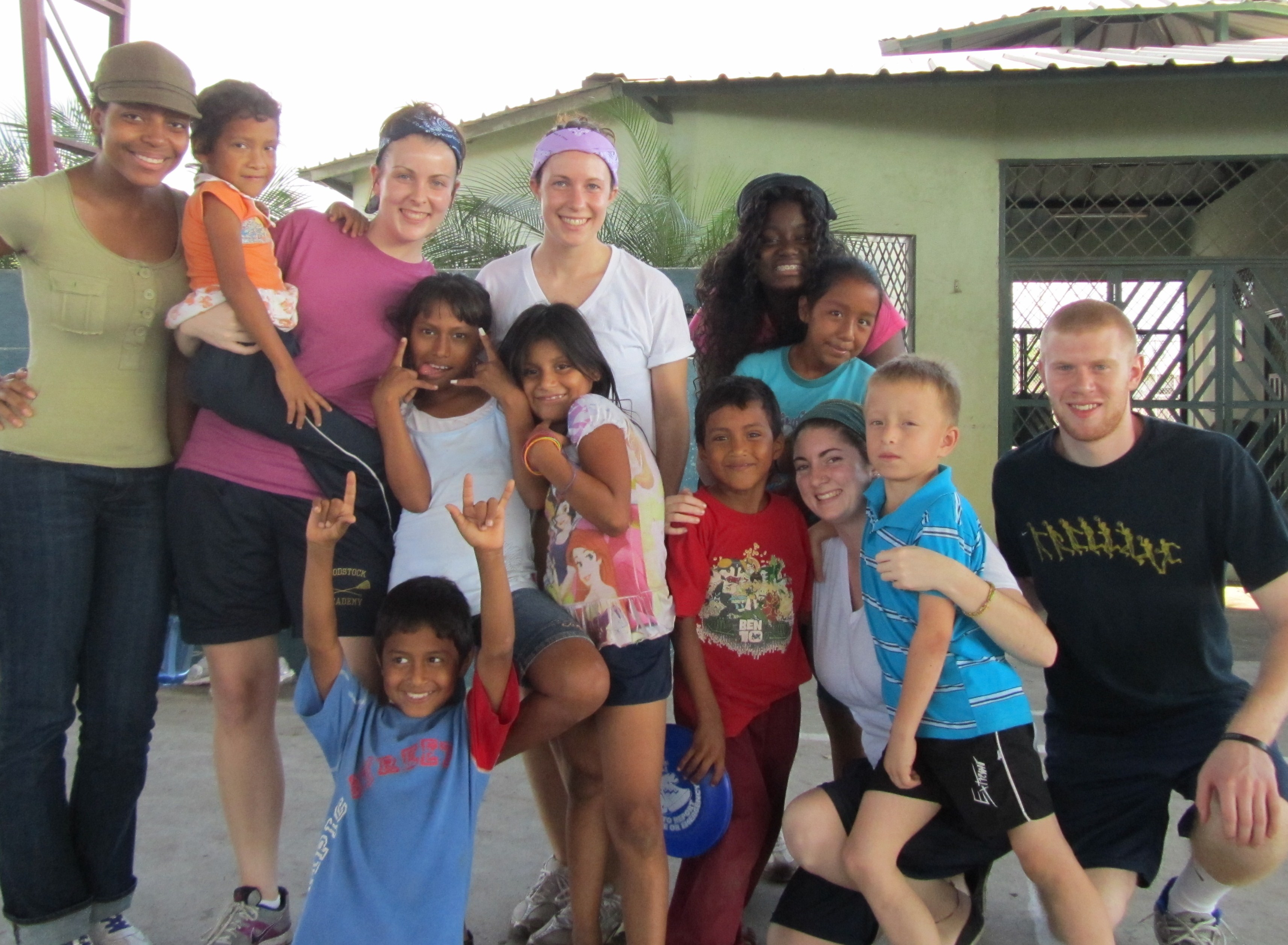
Colleen Putzel with one of her new Ecuador friends.

Colleen Putzel with one of her new Ecuador friends.

            Editor’s Note: Part of my vision for this blog is to make a space for others to directly tell stories of their own community service experiences. This week and next, I’m featuring recollections from Assumption College students, two of whom have been kind enough to send pieces my way. We’re starting with Colleen Putzel, who reflects below on the re-entry after her Assumption SEND trip to Ecuador last December.

            Whenever I talk about Ecuador I instantly smile.  The week I spent in Arbolito profoundly changed my life. It is the one and only environment I have felt completely myself.  I felt filled while I was there.  I learned so much about global poverty, relationships and God.  I hoped this high would continue at home. I hoped I could share everything that I learned.  I came back thinking that I was going to change the world.

Then I came back.  The first thing was the cold. I forgot that I lived in New England and had just spent the week in beautiful 80 degree weather. I was wearing a small sweater as we got off the plane.  Luckily my friend Alex had a sweatshirt I could borrow.  He is over 6 feet and I barely reach 5’4’’ so needless to say I looked ridiculous walking through the airport.  Then there were the Americans.  No one looked at each other, people did not say ‘excuse me,’ and the food sucked.  And then the excess set in.  It seemed as though people were never satisfied.  Enough certainly was not enough, they needed MORE.  Always more.

The worst thing people said to me when I came back was “Wow, you must really appreciate everything you have after experiencing and witnessing poverty first hand.”  Sometimes I look around at all the stuff that I am surrounded by and I want to cry.  It does not make me thankful for everything I have, it makes me see how insignificant all of this stuff is.

Putzel (right bottom) and others pose for camera.

Putzel (right bottom) and others pose for camera.

I had a really hard time readjusting.  I could not find a place back home or at Assumption where I felt anything.  I was walking around with sadness; sadness about how people interact and how they treat the world.  Most of my group members were seniors and I was a sophomore.  I had two more years and they were moving on with their lives.  I felt like I was losing some of the only people that understood what I was going through.  All of the happiness and fulfillment of self that I felt in Ecuador had left me.  I felt like I had failed everyone I met in Ecuador because I could not come back and spread their story.

Meeting and befriending Kate Beigner saved me from becoming a shell of a person.  She ignited my spirit and showed me that social justice is not only a possibility but also a lifestyle.  I no longer felt isolated, I realized there are many others like me who are fighting for a better world.  It also helped me understand that I cannot change things over night.  So instead of feeling sad about what I cannot change, I have decided to change the things I have control over.  First and foremost that is myself.  I cut down consumerism an extensive amount.  I use a reusable water bottle (plastic water bottles are the bain of my existence).  I try to advocate for others through the Social Justice Committee at school and through social media.  Most importantly I try to live everyday with the realities of others in mind.

Sometimes I am overwhelmed with what is around me.  But I try to take things that I learned in Ecuador and apply them to my everyday life.  Ecuadorians are some of the most welcoming and genuine people I have ever had the pleasure of knowing.  They greet and say goodbye always with a hug and a kiss on the cheek.  They are not shy about showing their emotions and sharing their own story.  The people I met showed me how vital relationships are in life.  I try to apply that to my life here in the states where many relationships are downgraded to the screen on a phone or computer.  I work hard to look people in the eye and show them that I care about them.

Ecuador taught me that I do have gifts that I can exercise to bring about social change.  It taught me to be myself, to challenge social norms and to fight for what is truly right in the world.  Coming back is still hard.  Many things have changed for me yet I struggle every day in a world of plastic water bottles and consumerism.  My leader in Ecuador, Billy, said it best when he said that we are all scarred for life from our experiences.  But, it is scarred in the best way.  Knowing, however hard, is so much better than not knowing.  It is certainly harder, but my life feels more fulfilling.  Meeting people in Ecuador gave me incentive and I try to live every day in a fashion which would make them proud and honor all that they taught me.

The group enjoys a party.

The group enjoys a party.

On Loves Passionate and Companionate

3 Mar
Cavanagh edited

Sarah Cavanagh’s blog appears in Psychology Today.

In the first installment of Sarah Cavanagh’s blog for Psychology Today, she explored the topic of romantic love.

Her first step was to (gulp) define “love.”

“Early-stage romantic love is often called passionate love, and this love appears to be at least partially distinct from companionate love, or the gentle care that grows in long-term relationships as the intoxication of early love cools.”

She then set out to explore passionate love, since Valentine’s Day was, at the time of the writing, “just around the corner.”

So why am I writing about this almost three weeks after Valentine’s Day, on a blog about community service learning?

The first reason is that, what can I say, I’m way behind.

Then there’s the temptation every blogger faces – to ignore her/his initial focus and start chunking into the blog anything that fascinates. Cavanagh’s blog fits that bill, since I’m a sucker for the social sciences in general, and for people who write well about it in particular. But imposing my random and eclectic taste on a collection of random and eclectic friends … well, that’s what Facebook’s for.

Apologies made, there are other reasons that make Cavanagh a welcome voice in  Serving … the Story. For one thing, she’s part of the latest wave of practitioners of Community Service Learning at Assumption. Specializing in positive psychology, Cavanagh has added 15 hours of service to her current Motivation and Emotion course; students will report on how the service  impacts their own psychological well-being as the service ensues. I’m excited to see the results of her pedagogical innovation as the spring progresses.

Most thoughtful-provoking, though, is how Cavanagh’s above distinction between passionate and companionate love might apply to our personal service experiences. The word “passion,” after all, is overused left and right in the rhetoric of vocation and avocation. In my senior capstone course, students reading Po Bronson’s What Should I Do With My Life? debate the role of passion in making career choices – do you just wait for passion to strike, or go out and try different jobs until that magical click occurs? Of course, when it comes to making a living, people are forced at least to try something – one has to eat, after all. But Bronson’s book is full of people who, security obtained, then repress their restless and discontent, their vague sense that they have betrayed their dreams by giving up too easily. (Some of them, interestingly, turn to volunteer work to satisfy the other sides of their selves, feeling their way to ultimate career changes.)

But when it comes to service, which is voluntary, waiting for passionate love can result in years of doing no service at all. While our drives for shelter and romance drive us onto the interview and/or dating circuits, community service often seems so abstract, we don’t even know where to start. (One hope I harbor for community service programs is that it makes the act of serving feel less alien when people look for ways to feel the gaps in their lives down the road.)

What I most think about, however, is this notion of passionate love as an ecstasy of connection and transformation – the hope that somehow the act of serving is a kind of transcendental and romantic experience, in which one’s own petty problems drop away and one connects to the world in an almost cosmic way, completely at one with the act of serving … and even experiencing reciprocation in the form of a connection with those being served. I do not say this ironically – who, after all, in their soul of souls, haven’t wished for this spiritual high? I’m guessing a fair number of readers have known just such a joyous moment at one time or another – that mountaintop experience so profound, one seeks to take it and bottle it, and hope they won’t dash said bottle on the rocks upon their return to earth.

Such moments have their place. They lift us out of our immediate context, remind us of vaster worlds and alternate realities – ones that could just as easily be true, if we simply choose to act that way, and apply some imagination to how our routines can expand to acknowledge our now broader sense of possibilities.

But as in romance, the work of transforming those moments of joyfully passionate service into something lasting is, I suspect, the role of companionate love – the kind of love that simply shows up every day, week, or month, regardless of the highs and lows of the service experience. The secret, it seems, is in the balance itself. And with that sense of routine, something more lasting grows.

What, however, if the two loves work in the opposite order?

Back in 1981, I trained on a mountaintop of my own – OK, more like a hilltop, in the ruggedly beautiful hill country northwest of San Antonio – as part of a Presbyterian program to send new college graduates to small churches which couldn’t afford to hire their own youth directors. A latecomer who applied only after someone I knew dropped out of the program, I was surrounded by people who had started applying a year earlier, who had systematically jumped through the hoops of the application process – and who knew, to one degree or another, that they had a passionate love for church work. About half would wind up in seminaries; it only took weeks for me to realize that I wasn’t going to be one of them. I fought the feeling that because I wasn’t radiating the same passion, that somehow there was something wrong with me – or with the experience. That somehow either I didn’t deserve the program or that the program didn’t deserve me.

What saved me was, of course, the companionate love of the friends I made during that five weeks of training. (Our leader, Dusti Deaver, made sure to fill our hours with group-building activities, from road-building and meal preparation to parties and, yes, massages.) Those bonds carried me through two fumbling years as a youth directorship – as did my subsequent connections with the people at my new church, First Presbyterian in Portland, Texas.

I never caught the passion for pastoral work – perhaps because the ministry and I didn’t share some of the commonalities so vital to Cavanagh’s description of passionate love. But I stood by my commitment to the church, just as the church stood by me – and, even though I didn’t know it at the time, all this companionate love in south Texas was laying the ground work for all the passionate loves I relish in my life now, from teaching and networking to service and writing this very blog, here in a New England coffee shop that, like so many things, a lost lad of 23 in the Texas hill country didn’t know existed.

So when future students share valid concerns that they didn’t feel what they hoped to feel during their volunteer work, I’ll likely mention Sarah Cavanagh’s blog, and add how sometimes passionate love doesn’t lead to companionate love – sometimes it’s the other way around.

Impossible Compassion?

2 Feb


In the superbly crafted and emotionally powerful The Impossible, a film about the Dec. 26, 2004 tsunami, one of the more compelling moments involves not the sharing of medical supplies or fresh water, but a cell phone.

As several male survivors huddle amid some ruins somewhere in Thailand, a stranger tells how he had raced the water upstairs to his hotel room – only to find a note from his wife, letting him know they’d gone to the beach. Now he’s clinging to the thought that they somehow survived – and that at some point someone will call his cell phone, informing him of their location.

But as a second man shares the story of his own failed search for his wife and one of his sons, the first man offers his phone, even though it risks depleting the cell’s battery and ending his opportunity to receive good news. He watches as the second man contacts a relative, only to collapse in sobs, then end the call, honoring his promise to save the first man’s battery.

After a pause, the first man offers the phone again.

“You can’t leave it like that,” he tells the distraught caller, who then composes himself long enough to give his relative a more positive promise.

The poster

This line comes as close as any to summing up the spirit of The Impossible, which features Oscar-nominated Naomi Watts and the equally impressive Ewan McGregor as parents of three children who had taken their family to the Thailand beachside resort for Christmas vacation. Despite its Anglo-Saxon casting, the film is based on the experience of the family of Enrique Alvárez and Maria Belón, the latter of whom is given a writing credit on the film.

But director Juan Antonio Bayona repeatedly reminds the audience of the larger devastation, if only as experienced through the eyes of this particular family. While confined to Thailand, Bayona’s film makes it slightly easier to imagine the ultimately unimaginable – how the tsunami killed, according to one U.S. Geological Survey count, 227,898 people.

Yet in the face of the humbling and brutal indifference of nature to humanity, the film resists most clichés of the formulaic Hollywood disaster flick. Resisting both  apocalyptic anarchy or trite sentimentality, the film convincingly shows people overcoming their own fear, grief and confusion to help others, getting a grip on their own situation in the process.

The remarkable ability of human beings, even with their backs to the wall, to set aside their own plight to see the bigger picture makes the film easier to bear – and seeing The Impossible is one way we can do the same.

Tim DeChristopher: Individual Daring, Communal Faith

19 Jan

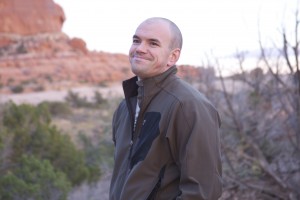
DeChristopher in his beloved wilderness.

Back on December 19, 2008, Tim DeChristopher, like the average college undergraduate that time of year, took a final exam.

But then DeChristopher headed to downtown Salt Lake City for a demonstration against the impending sale of oil and gas leases on federal land for $2 an acre. Instead of joining the crowd, the undergraduate walked into the actual auction of the land – where someone handed him a paddle, assuming he was there to bid.

So, to even his own surprise, he did.

By auction’s end, he had bought about 22,500 acres of leases, at a total price of $1.8 million.

There was, of course, one problem.

He didn’t have $1.8 million.

The result: He was convicted of disrupting a federal auction and sentenced to two years in a minimum-security prison. (In October he was released to a halfway house where he will compete the term.)

But that’s not the end of story. As detailed in Donald E. Skinner’s article in the Winter 2012 edition of Unitarian Universalist magazine UU World, his spontaneous yet sly more delayed the auctioning of the land, some of it close to national parks, until Barack Obama was in office – at which point a more environmentally friendly administration gave up on the idea altogether.

Reading Skinner’s article, I couldn’t help seeing DeChristopher’s prison term as a kind of community service. Many socially conscious students do a year or two of volunteer work through church, government or other non-profit agencies, and while they make a significant difference in more subtle ways, the experience just leaves them that much more frustrated about the big picture.

Meanwhile, DeChristopher knows the result of his individual sacrifice: More than 20,000 acres of preserved wilderness.

Yet DeChristopher argues that the key to his activism was not his individual daring, but his feeling of connectedness to others. In a companion essay to Skinner’s article, DeChristopher defines activism as “the actions of those who lack authority through the traditional power structure yet still believe they can shape the society around them. Because activists by definition are at a disadvantage to their opponents, the effectiveness of activism is based on activists’ interconnectedness.”

People who dismiss the efforts of activists, DeChristopher argues, are more invested in the myths of individualism than the values of community. “Those who believe in the notion of the isolated individual usually refer to activists as naïve. It’s ridiculous to think that one isolated individual could possibly change massive institutions like corporations and governments.”

Which is why for DeChristopher, even secular activism can be a spiritual statement. “By its very nature, activism is an act of faith in our fellow human beings. The greater the risk and sacrificed involved in the activism, the greater the faith required in each other.”

This seems ironic, given the act of individuality that stopped the auction in the first place. But it only worked because millions of others shared that concern, including a President. Whenever the many perfectly credible reasons for cynicism threaten to grind us down into inaction, stories such as DeChristopher’s can affirm the faith to keep making a difference – whether small or, now and then, enormous.

Roll … Irish?

6 Jan


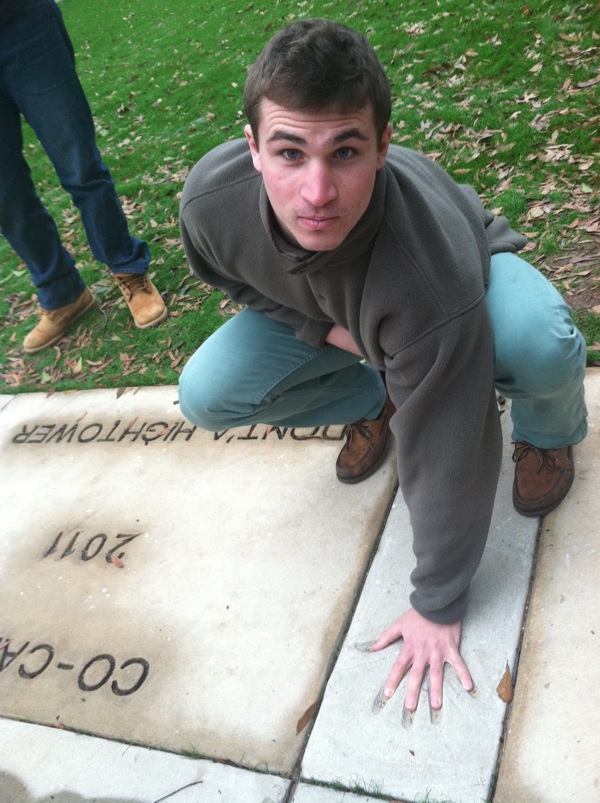
Nick Finan followed in the handprints of former Tider and current Patriot Dont'A Hightower.

Nick Finan followed in the handprints of Tider/Patriot Dont’A Hightower.

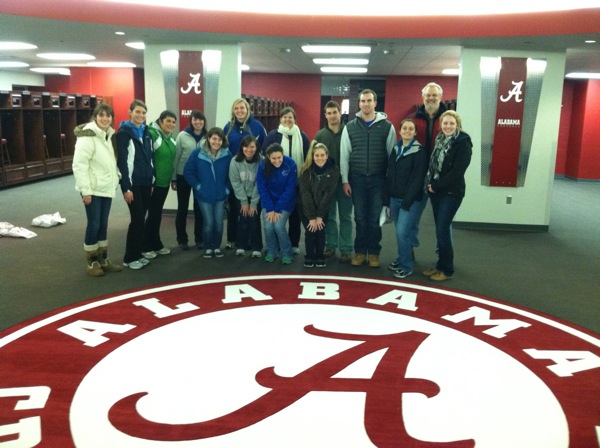
Once again Assumption College’s SEND program has sent students to help Habitat for Humanity rebuild my hometown of Tuscaloosa after a catastrophic 2011 tornado – and once again Alabama will be playing for a national championship during their visit.


Only this time around, our students will be tempted to root for the other team – the Notre Dame Fighting Irish, coached by Assumption graduate Brian Kelly.


For my essay about the ironies and paradoxes of the visit in the sports section of today’s Worcester Telegram, see the link below.

Roll … Irish?

Meanwhile, the students are impressing as usual, in both the way they work on the Habitat construction site and the way they carry themselves in general.

More, of course, to come.

Assumption's 2013 team in Bama locker room, next to sacred seal on which only Nick Saban may trod.

Assumption’s 2013 team in locker room, behind seal on which only Nick Saban may trod.

2012 Will Stick With Me.

1 Jan

On the next to the last day of 2012, I was still doing my holiday rounds, catching up with yet another neglected friend before the year ended – and, of course, so was she. Since she’d read my October blog about Rev. Sam Wells, my friend knew about his assertion that the key problem of human existence is not mortality, but isolation. By this logic, the most important thing we can do is not to solve problems for people, but simply be with them. I mention Wells again to my friend, if only by way of saying that by that standard, my Christmas Eve spent at home nursing a cold fell far short of the standard.

As we talked, my gaze settled on her lapel pin, a shining green dragonfly. The sight send my mind skipping back to another depiction on the species, one outlined on a quilt in progress I saw back in May, in the living room of a Lakota woman on Pine Ridge Reservation in South Dakota.

While students worked outside on replacing her two porches, she kept quilting; she told me the star quilt was for her son, hospitalized from injuries suffered while serving his country on the battlefields of Afghanistan. I would learn later that the dragonfly was a common decoration of Lakota warrior shields, based on the Native American belief that the dragonfly had an uncommon ability to dodge projectiles.

Outline where dragon fly was to be sewn on the Lakota star quilt.

Outline where dragonfly was to be sewn on the Lakota star quilt.

Later, when I headed home from my holiday catch-up session, I remembered that brief stream of consciousness – and discerned a deeper implication. Sure, I had failed to truly be “with” people on Christmas Eve, but the year as a whole blessed me with a richness of connection. I’m not even referring to my wealth of loved ones, but to the service-related experiences described in this, the first full year of this blog. So naturally I want to spend part of this year’s last day meditating on – and celebrating – some of those moments of, as Wells might say, “being with.”

For your sake, I’ll try to channel this particular stream of consciousness into something close to chronological order – this is an end-of-year essay, after all.  As it happens, 2012 started with a level of connection that set a near impossible standard for the rest of the year – students and staff from Assumption College, my employer, came to my tornado-ravaged hometown of Tuscaloosa, Alabama. Sam Wells would have approved: Our SEND students not only helped build a house for victim of the tornado,  but asked a lot of questions and did a lot of listening, trying, as one student put it, simply “to understand.” In the spirit of cultural immersion, they insisted on the purchase of Alabama t-shirts and other fan apparel the very first afternoon, already looking ahead to the national championship showdown with LSU the next Monday night. I was surprised at the enthusiasm, then dismissed it as stereotypical tourist materialism – then to realize, finally, that this was in fact cultural immersion. What faster way to bypass all the differences between yourself and the place you’re visiting than to adopt your hosts’ sports teams? I’d done the exact same thing when I moved to New England. But the most significant image of connection came on the final night, when each student and staff member hugged my mother on the way out the door of her house, after a night of sharing barbecue and memories with some of the folks from Habitat Tuscaloosa.

As previously noted, it seemed the service year could only go downhill from there. And yet, for the most part, it didn’t.

2012 Assumption group with Mom in her living room on visit's last night.

2012 Assumption group with Mom in her living room on visit’s last night.

Sitting here on New Year’s Day, I remember tudents sharing their service experiences at both our Community Service Learning colloquium and at Campus Ministry SEND programs. Colleagues, meanwhile, shared their elegant course designs at our CSL Faculty workshop. Then there were the three colleagues whom I got to watch in our dual English/Sociology course, “The Literature of Social Resaponsibility,” built around the HBO series The Wire. Most conspicuous was Sociology professor Rich Gendron – my partner in the shaping and teaching of the course – and his ambitious, passionate approach to lecture, leading students through class after class of astute sociological analysis. But I was also deeply engaged by guest appearances by professors in two other disciplines: Philosophy professor Josh Shmikler filling a wall-wide whiteboard with a chart delineating the ethical journey of a single Wire character, and Diane Myers telling her personal story of working in the juvenile system and inner city schools in a way that was as insightful as it was entertaining. It was another reminder of why we need to work harder to facilitate cross-disciplinary experiences.

While teaching that course, I also got to break away long enough to wander the streets of New Orleans with three of our most accomplished English majors, there to present papers at the Sigma Tau Delta Convention. While they were not there to do volunteer work, they asked a lot of good questions, not wanting their first visit to the Big Easy to be intellectually wasted. After they left, I tried to honor their attitude with some politically correct tourism, allowing two young guides to take me through the economically run-down Treme – the subject of the next series by the makers of The Wire – before going to hear Treme-theme singer John Boutte in a small jazz club. There I asked a lot of questions of a couple who’d jut moved there from Mississippi; they offered both their insights and a place to stay my next time down, setting up a dynamic email exchange after my blog.

Only two months later, I was lucky enough to ride the plains of southwest South Dakota with 13 Assumption students and the people of Project Re-Member, working to help the shockingly poor Lakota of Pine Ridge Reservation. Students all seemed to open their minds to lectures and language lessons – and threw their  bodies into the work, tearing down old porches and building new ones, when we weren’t digging holes for outhouses or repairing roofs. Among the experiences that stick with me: One Lakota walking us through the cemetery at the Wounded Knee massacre, then leaving us to take in the names on graves dug to either side of the old mass grave. A few days later, children at one house riding student shoulders in a game of chicken – a few hundred yards from their grandfather’s old sweat lodge.

Piggy back 2

While her parents were more excited about the new porches, this Lakota child was more jazzed by all the free piggy-back rides.

The laughter of the language lessons, turned into a game by a radiant Lakota woman who taught in the reservation school system. The last night, talking about the week with a fellow volunteer, taking in the sharp clarity of the stars so far removed from what most of us wound consider a city – until a neighborhood dog materialized out of the darkness like an apparition, sniffing her calves before we even knew the dog was there.  The hugs all around the next morning, as the various volunteer groups took off in different directions. How, when Delta betrayed us and split our group, I stayed behind while the students departed – and, with the students gone, felt the sadness of the trip having ended, even though I was still sitting in Rapid City, alone with my copy of Lakota Woman.

There was more than I have time to write or you have to read, from the day the kids of African Community Education spent on the Assumption campus and my visit to the Lilly Foundation conference in Indianapolis, where I got to experience Taize-style meditation, the participants circled around candles and cross, mostly meditating in silence while listening to chants, trying to connect with something beneath the words – the spirit that, despite our very different backgrounds and approaches to life, still seems to bind us. I was so moved, I was one of the last to leave – another of the few being Wells himself, although at the time I didn’t know whom he was, or how his speech the next day would reach me.

One more point of connection out of the many: The people I met delivering meals at Thanksgiving and Christmas. This isn’t nearly as virtuous as it might sound: During my Christmas morning run, I noticed several other volunteers delivering their own packet meals to still other residents. It came to me that Catholic Charities could’ve bundled all those meals into one delivery – but that would have defeated the point, which was giving us – in my case a man living alone who doesn’t celebrate Christmas morning with another human being – the opportunity to duck the holiday depression and connect with someone other than ourselves, feel like we’re part of something bigger than ourselves.

Two-way ministry? Well, yeah.

The Facebook fans among you might notice that this 2012 nostalgia trip has only acknowledged being with people in a physical sense – in classrooms or chapels, streets or countryside. But as much as people express worry about cell phones and laptops as things that take us out of sharing moments with the people sitting next to us – as I’m doing even this moment, sitting at an oyster bar in the Baltimore airport – I would be remiss not to acknowledge the opportunity to be with others on-line, whether in this blog or elsewhere.

I think of this only because of a Facebook post by former student, current colleague Taylor Nunez, now a regular contributor to Worcester Magazine.

Taylor challenged me and other friends with this message:

I’ve decided that 2013 will be about connecting – to myself and to others. I want to blog more and express myself more, but what I really want is to connect with people. One-to-one. Heart-to-heart. Who’s up for being a pen pal for 2013?

            The written word is the one thing in this crazy world that I truly believe in. Let’s use it, people.

Reading her post, I suddenly knew my resolution for 2013.

More of the same.

If, of course, I can only be so lucky.

Yethulsa Justin 2

Lakota for what body part, exactly? Yethulsa and Justin clearly have different opinions.