Archive | Uncategorized RSS feed for this section

Transcending Geography

14 Dec
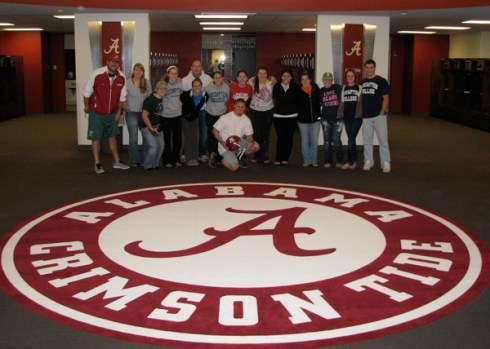
Sacred circle

Assumption’s crew in Alabama locker room two days before last year’s national championship victory, courtesy of Habitat for Humanity Tuscaloosa.

          Thanks to Denise Magner and the rest of the good folks at the Chronicle of Higher Education, I present my latest column about the Assumption-Tuscaloosa connection.

           So looking forward to the 2013 version, of which, of course, more will be written.

Santa Barbara: The Sequel

7 Dec

In my November 18 blog “Ubuntu Hits the Streets,” I shared my reflections on a moving essay by Suzanne Beachy, in which she retraced the steps of her deceased homeless son on the streets of Santa Barbara.

The friend who originally brought this essay to my attention, Jill Wallerstedt of Santa Barbara Rescue Mission, has since been featured in the Soloist Project, a student endeavor for which Jill was interviewed.

Use this link to see the results. And meanwhile, gratitude to Jill for both being so good to visiting students and for the work she does week in and week out at the Rescue Mission.

Thanksgiving with Pablo

1 Dec
Thanksgiving sack meals

Loading up the Toyota with Thanksgiving meals.

      The man, tall and broad-shouldered, struck me as vaguely familiar. But so crowded was the waiting room, his nod could’ve been intended toward any one of four or five people around me.

      Even after he sidled up at the coffee pot and called me by name, I couldn’t quite recall his. But a man in his profession is used to that.

“I’m your postman,” he said, smiling.

I could have offered two excuses for failing to recognize him. Instead of my apartment building parking lot, we were inside Catholic Charities, waiting for our names to be called to deliver meals. Instead of a uniform, he was dressed casually, Thanksgiving one of the few Thursdays he could choose his own clothes.

“Isn’t this what you do every other day of the week?” I asked.

He smiled.

“Yeah, but this is the one day I’m bringing them something they want,” he said, referring to the meals we were delivering.

“The rest of the time it’s bills.”

Still, what would possess a postman, of all people, to spend a precious off day doing something so close to his day job? Amid the jostling of the crowd, I didn’t get to ask, but whatever his reasons, he’s been doing it for many years.

My reasons were easier to understand. Unlike my postman, I work a sedentary job as a college professor; I often miss my journalism days of driving the streets and making new acquaintances. But delivering meals often falls short in the latter regard: Last year, my first making the Thanksgiving rounds, I didn’t manage a single extended conversation. Either folks didn’t want conversation or already had plenty of it, in the form of Thanksgiving guests. Would this year be the same drill – or would I be lucky enough to have a conversation? Without being intrusive, would I manage to make a connection?

As I unloaded lunches into the trunk of my Toyota, I couldn’t help thinking, yet again, about Sam Wells. Last month I heard the Anglican vicar and community service advocate preach on how being with people tends to be more satisfying than doing things for people; one of his examples of the limitations of doing things for was actually a holiday food drive, in which a person drops off food and/or clothes without connecting to another human being. He argued that on a deeper level, the choice came down to whether we think the biggest human question has to do with mortality (in this case, feeding people) or isolation (in which case the larger value of meal deliveries was the choice to be with them).

Of course, they have to want to be with you.

So even as I strived to open my heart and demeanor to the possibility of a conversation, I was preparing for the chance that it wouldn’t happen. Such a gift, I told myself, was one they must choose to offer.

This particular day, the gift came from a bird.

Specifically, a cockatiel named Pablo.

I spied the yellow-feathered fowl sitting on the sofa, just over the shoulder of the older woman who answered the door. She was living alone and on oxygen, the tubes inserted into her nostrils, but she brightened the way any proud pet owner would when I exclaimed, “Oh, a bird!”

I asked if I could look more closely, explaining that in my office I had a photo of my sister’s cockatoo riding the shoulders of the family dog.

“I have a co-worker who is obsessed with the idea I should have a cockatoo,” I said. “I’m not so sure.”

She smiled. We settled across her coffee table from one another; beside her on the couch, Pablo looked my way, the orange-red round markings on each cheek.

“They told me that Pablo was a male,” she said, in that wry way that told me the opposite would prove to be the case. “Then one day Pablo was rustling around behind a crossword puzzle magazine on the couch, and I moved the magazine to see what he was doing, and there were three eggs!”

I thought about sharing that many years ago at the pound, I thought I was adopting a female dog and signed her up to be spayed, only to then give the hypothetical her a bath in the dog pound sink and find, well, you know.

I decided against it.

Instead, we talked a while longer, some about her having lost her husband and how the old house is hard to heat – but then she noted on my accent, asked where I was from. “So what’s Alabama like?” she asked. I gave her the standard synopsis: Hot summers and warm winters, fried food and barbecue. I said it was easier to get to know strangers – almost more easy than I want it to be nowadays, New England having sold me on the perks of personal space. “When Mom does Meals on Wheels in Tuscaloosa,” I joked, “it tends to take a long time.”

Pablo’s level of engagement in all this was hard to ascertain, but beside her on the couch, my host laughed. In a few minutes of conversation, we’d talked birds and dogs, husband and sister, Massachusetts and Alabama – and in the process I’d been reminded that even so far from home, I was still in tune with an example set by my very Southern and hospitable Mom.

Having been received with such hospitality, the rest of my route unfolded easily enough. At the next stop the recipient had the company of both his loving family members and a gigantic treadmill, which I commented on. “Yeah, it’s great for hanging my clothes,” he joked, and I told him my exercise bike served the same purpose for many years. As with my first stop, the same ease of conversation, the same obvious commonalities between the recipient and me. Two stops that were more brief, then finally, in a fitting conclusion to my rounds, a good doorway talk with a woman in her 90s who, like many her age, has had the strange experience of outliving some of her own children.

She acknowledged the sadness of this, but she carried herself well. Tall and energetic, she was well-dressed, complete with oval lapel pin featuring the face of Jesus. “Life is good,” she asserted, smiling. “Have a Happy Thanksgiving.”

As I drove away, I glanced at my watch. Not even noon. Most Thanksgiving mornings, I would’ve woken up late, done yoga, meditated on concepts of love and grace in the abstract, instead of actually experiencing it concretely with another flesh-and-blood human. The closest I would’ve come would be to call my folks in Alabama, working in hurried exchanges before they got back to preparing meals I wouldn’t be attending, but then I would’ve hung up, feeling a bit of the isolation to which Wells alluded in his sermon.

It turns out that all those times, instead of feeling sorry for myself, I could’ve been driving door to door on a lovely morning, lifted from the doldrums by the grace of volunteers and recipients.

Such is the difference Catholic Charities and other such agencies makes in the Thanksgiving of recipients and volunteers alike.

To which I’ll only add that, well, Christmas is right around the corner. As are our neighbors. Always.

Thanksgiving sack close

“May the blessings of the holiday be with you”: The message Catholic Charities delivers.

Kindness on the street

29 Nov

NYC Officer Gives Boots to Homeless Man

Since we’ve written much recently about the importance of being with people on an individual basis, I want to include here this New York Times story about a New York City police officer’s act of kindness to a homeless man, captured by a tourist passing by.

Most of us, me included, fear caving in to compassion to any given individual on the street, since, after all, the need out there is infinite and our bank accounts are not. That would seem even more true for a police officer, who would be in more direct contact every day.

Nevertheless this man acted. See the link above.

Gratitude from Newfoundland to New Orleans

22 Nov

For which I am grateful, any day of the year.

Last Sunday at First Unitarian in downtown Worcester, pastor Tom Schade preached on gratitude. That particular emotion – or attitude, or philosophical stance, or way of being in the world, or all of the above – radiated from both Tom’s delivery and the congregation’s reception. This was with good reason: With our long-time pastor set to retire to Michigan not so many Sundays from now, one thing folks are grateful for is every Tom Schade sermon we have left.

As usual, it was a very smart sermon, discarding Hallmark sentiments in favor of subtler insights. Gratitude, he noted, was so hard to continuously feel because while we are so focused on the present and future, gratitude demands a continuity with the past.Then there is the challenge of how we construct the narrative of that past. Will it be a story that focuses on disappointments and betrayals – or a more positive plot that foregrounds the blessings?

Sitting there, I thought, “Wow, it’s so important to carve out a space for gratitude, it’s a shame we cannot carve out an annual day when … “

Oh, wait a minute.

Sly dog that Tom was, I don’t recall a single mention of the possible existence of such a holiday, one that, say, might be associated with turkey and stuffing and gravy and pumpkin pie and football and some dubious rock on the Massachusetts coast that might or might not be the rock that … well, you know. Maybe he slipped it in there, but I generally tend to notice references to food.

Instead of provoking salivation over Thanksgiving feasts to come, Tom’s sermon reminded me of a very different Thanksgiving – one six years ago in New Orleans, experienced not by me but one Chris Rose. A New Orleans Times-Picayune columnist,  Rose wrote the Pulitzer Prize-finalist 1 Dead in Attic, which collects many of the columns he wrote over the first 15 months of life during and after Hurricane Katrina.

Since I bought it in a funky corner bookstore in the Big Easy, I connected to the book quickly – but I could’ve bought it in Nova Scotia and still been sucked right in. It’s that good: The perfect example of a great story happening to a great writer, 1 Dead in Attic offers a complexity of tones as complex as New Orleans itself: It’s alternately tragic, bold, sad, funny, sobering, stupefying, redemptive, and, at times, even celebrative.

The inspection marks that inspired Rose’s book title.

Despite all he had experienced – including a crippling depression that gradually sneaked up on him during a year of covering and living post-Katrina New Orleans – Rose comes around in the last few pages to gratitude. He casts the question in a framework larger than New Orleans: He goes as far north as Gander, Newfoundland, which on 9/11 took in 6,595 stranded airline passengers for days. (The Gander story is chronicled in Jim DeFede’s The Day The World Came to Town.) To Rose, the diversity of ways Gander helped its wayward travelers is similar to how still other strangers helped New Orleans. One basis of similarity, Rose suggests, is the sheer impossibility of telling the entire story. If comprehending the catastrophic loss of Katrina wasn’t enough to strip the gears of our imaginations, figuring out who all to thank would certainly finish the job.

Rose writes: “Big Government failed and politics failed but the people rose up, giving us such an abundance of things to be thankful for that it boggles the mind. And the strange thing is that– outside of each of our own singular experiences (those who sheltered us, gave clothes or money or provided whatever needs were most urgent)–most of us don’t even know who it is we’re supposed to thank and what it is they did for us. But there are hundreds of thousands of them–no, millions!–who made sacrifices of time, money, travel, labor and spirit to help the people of south Louisiana and Mississippi get  back on their feet and become some small semblance of what we once were and of what we will become again someday.

“So, today, Thanksgiving, just who do we thank? All those people. But how do we tell them, the soldiers and doctors and Common Grounders and church groups and corporate groups and school groups and animal rescues and the uncountable and unknowable masses who came to our city to clean us up, dust us off, give us a meal, and give us a hug before going back to their own homes forever changed, just as the folks in Gander will never be the same.

‘It’s weird: I just feel like picking up the phone today and randomly dialing some small town somewhere and saying thank you for what you did for us because it’s inevitable that they did something for us.”

On a much smaller scale, most of us have our phone calls to make – more calls, in fact, than we could possibly squeeze in. My personal list would run into the hundreds, and that’s ignoring the folks who came to my own hometown after the devastating tornado of April 27, 2011. Plus, if Lady Fortuna herself had a 1-800 number, I’d be ringing up her as well.. But of course the bigger question still is how to pass on the grace we’ve experienced to still others.

Or, as Rose puts it, “since we’ll never take stock of who they all were, really the best way to thank them is to succeed here, to become a city and region better than we were, a place strong enough, unified enough – and good enough – to take in thirty-eight planes full of strangers when it’s our turn to answer to the call of membership in the human race.”

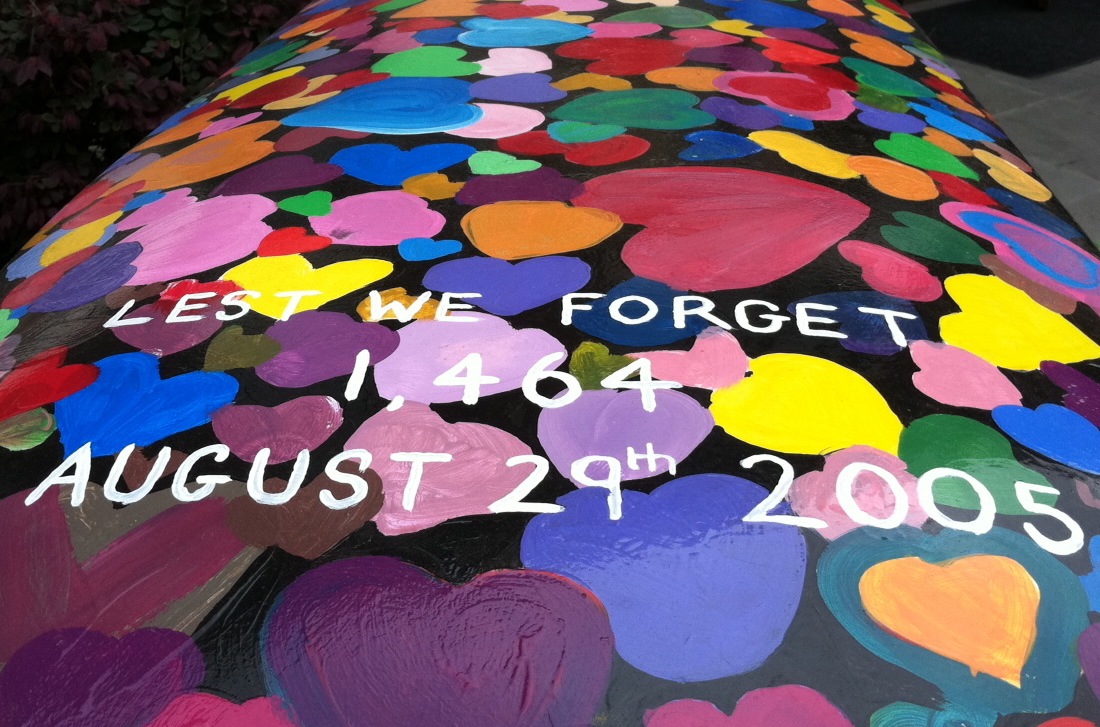
Memorial coffin near New Orleans Visitor Center.

Ubuntu Hits The Streets

18 Nov

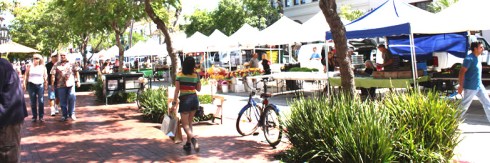
Santa Barbara’s State Street during Farmer’s Market.

Easter morning began with me sipping coffee on the porch next to my host’s pool, watching a hawk sweep over a California canyon lush with spring. When she was ready for church, I rode shotgun, felt the swerves as she skimmed Mission Ridge. Between the million-dollar homes, the Pacific Ocean glittered in the morning sun, the Channel Islands floating misty on the horizon.

If this wasn’t paradise, it was the closest I was going to come to it. But then, I think that a lot when I’m out in Santa Barbara. Other people must think it, too: One of the more affluent cities in Southern California, Santa Barbara boasts more than it share of movie stars and other individuals of affluence. But as I was about to be reminded, that’s only one side of life in this seemingly idyllic community.

We parked next to the expansive gardens across from the Unitarian Society. While my host’s choir duties required her to sing in two services, it was my privilege as a singing-impaired visitor to only attend one. So while she rushed into the Spanish-style sanctuary, I shouldered my laptop bag and moseyed down State Street to my favorite coffee shop.

This was the main drag of up-scale shops and restaurants, galleries and cafes, but this early on an Easter morning, the hustle and bustle of commerce had yet to start.  A delicious calm hung over the avenue. Here and there workers hosed the red tile sidewalks that appeared clean enough to start with. A few folks drifted in and out of breakfast joints. Some were dining, some were on their way somewhere – and some were doing neither.

Case in a point: A slender, wrinkled man on a bench, his backpack beside him as he listened to a fortyish earth mother of a woman, wearing a flowing skirt, a vest over her white peasant blouse. Long curly hair, no makeup, a lovely kindness to her face. Vaguely hippy-ish.

“Yeah, the way I dress, people sometimes I think I’m homeless, but I’m not!” she said, laughing at the thought – and the man on the bench, who apparently was homeless, laughed along with her.

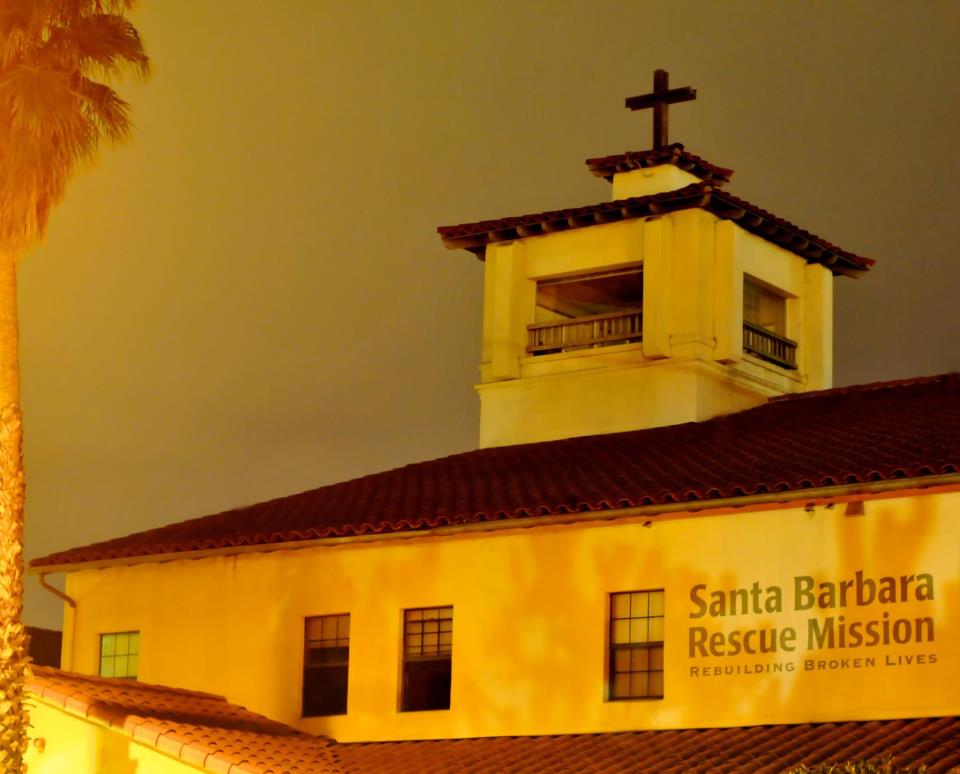
Santa Barbara Rescue Mission, a few blocks from East Beach.

As I swept through the rest of a crowded Easter social calendar, I didn’t mention the scene to a single person – nor have I since. But this singularly un-dramatic scene has stuck with me for years, for reasons I still don’t completely understand. Much of my marveling must lie in the matter-of-factness of the woman’s mirth, her utter lack of self-consciousness. She didn’t fumble self-consciously to avoid the topic of the other person’s homelessness; she didn’t ignore the reality both people knew all too well. I would be so worried about saying the wrong thing, I might not speak to him at all –an act probably worse than anything I actually would say.

On a deeper level, though, her relaxed dialogue seemed to imply a deeper attitude about homelessness – an utter lack of shame and stigma, of being embarrassed for the person’s economic situation. It suggested someone who has not only suspended the impulse to judge, but had eradicated it entirely. Along with, perhaps, the fear of engaging the homeless: Fear of not only danger, but fear of being asked for more than she could give – or of giving with a sense of futility that a few dollars won’t fix the person’s problems. Setting such obstacles aside, knowingly or unknowingly, she was rising to the challenge set forth by Rev. Sam Wells in one of my previous blog entries – the challenge to set aside our need to solve problems for people (often at a safe distance from said people) and get down to the business of simply being with them, right here, right now.

I know, I know. This is a whole lot of philosophizing to project upon a few minutes of overheard conversation, and it probably says less about the person being projected upon than the person doing the projecting.

Which is, of course, me.

Obviously I feel some of the social awkwardness, with its attached shame and guilt, myself. On a conscious level, I see the lives of people as being formed largely by social circumstance, a complex interplay of determinisms, from family life and biological predispositions to economic class and just plain bad luck. I don’t judge people I see working the street corners. But I also fail to engage them, which risks conveying a kind of judgment, intended or not.

This point was clearly addressed two weeks ago, when my Honors 200 students paid a visit to the Homeless Outreach and Advocacy Project at 162 Chandler St. here in Worcester, Massachusetts. There they met with not only HOAP’s extraordinary, dedicated and generous staff, but also clients who had experienced homelessness, in some cases for decades. One client likened himself and others on the streets to being “slugs that hide during the day”, leaving only a trail to suggest their existence. “You have to understand that in our minds, you are the better and we are the worse.” That assumption so governed his daily interactions, only in recent times, since he’s found housing, has he realized to degree to which it shaped his social reality.

A week later, I found a Facebook post that made me connect in a flash the man from HOAP to that distant morning back in Santa Barbara.  A friend there has dedicated her life to helping the homeless through the Santa Barbara Rescue Mission, a few blocks off East Beach. Jill posted a link to a powerful article by Suzanne Beachy – a piece that was haunting for both its heartbreak and its heroism. Jill’s Facebook note with the link stated simply, “Beautifully written and moving. Please read this if you feel uneasy talking to a homeless person.”

Suzanne Beachy.

Published on-line in Mad in America: Science, Psychiatry, and Community, the essay “Lost and Found in Santa Barbara” recounts the story of how Beachy’s son wound up homeless in Santa Barbara, where one day he was killed by the train just off East Beach, not too far from the mission where my friend works. About a year later, the writer journeys from her home in Ohio to Santa Barbara, on what would have been her son Jake’s 29th birthday.

From a hotel employee and caseworkers to people on the street, strangers greeted Beachy with warmth and compassion, sharing their own stories. One man, a witness to her son’s death, took her to the tracks, showed her where her son’s body landed, and shared with her something he’s written later that day, as he was processing the shock of what he just saw. Beachy recounts: “The words that soothed my soul read, ‘ . . . this didn’t seem like a suicide to me. It looked like the guy was unaware that the train was coming.’”

But that wasn’t enough, not nearly, for her on this trip. “As someone who is always seeking foundational truth, I try to imagine how God views homeless people. Instead of seeing a ‘homeless problem’ as many of us would describe that situation, I think he would see homeless people the same way he sees all of us – a bunch of lost sheep in need of a shepherd. … Like the kind people who reached out to me, am I, in turn, speaking hope into the hearts of the hurting or lost?”

So she walked the same Santa Barbara streets I walked – but with a very different attitude toward the homeless. As she approached them, she confessed to feeling the same psychological obstacles as most of us: “ ‘Were they a menace?’ I wondered. I felt afraid of them and somewhat repulsed. But my son had been one of them less than a year before, and HE was not scary, dangerous, or repulsive. He had been just a beautiful, lost, mess. I decided I should try to get to know some of these homeless ones, even though I did not really want to. Once again, I had to push through dread and fear.”

In the process, she did do some things for people – such as bringing lunch – but she took the time to be with them first, asking permission to bring the food. That night,

she would run into one of her new homeless acquaintances a second time – near the spot where her son had died.

What happened next? For that, you’ll have to go to her beautiful and brilliant essay, which deserves to be read directly, unfiltered. I guarantee you’ll find it well worth your time, for both its content and its form.

Instead, I’ll simply share the quote she took herself from Desmond Tutu, in which he defines “ubuntu.”

As Beachy quotes Tutu, ubuntu “. . . speaks of the fact that my humanity is caught up and is inextricably bound up in yours. I am human because I belong. It speaks about wholeness, it speaks about compassion. A person with ubuntu is welcoming, hospitable, warm and generous, willing to share. Such people are open and available to others, willing to be vulnerable, affirming of others, do not feel threatened that others are able and good, for they have a proper self-assurance that comes from knowing that they belong in a greater whole.”

When it comes to ubuntu, well, I’m still working on it. But two women strolling the streets of Santa Barbara have shown me what ubuntu might look like – as have the homeless who returned their gestures in kind.

Thanksgiving volunteers at the Rescue Mission.
Managing Spontaneity: ACE at Assumption

10 Nov

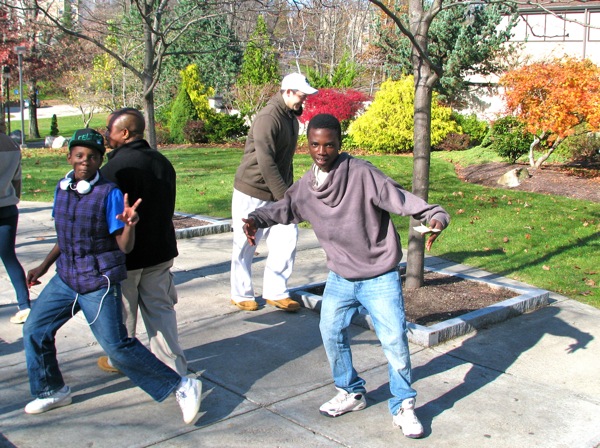
ACE kids strike pose outside Charlie’s on AC campus.

Standing outside the food court on our college campus, I watched as a group of students flowed out into the sunshine.

Not an unusual occurrence, but these kids were different. They weren’t worn down by midterms or papers or worries about course registration; they didn’t shirk eye contact or shrink away, even from my camera.

Instead, they were downright frisky – some sprinting ahead of others only to be called back by their Assumption escorts, others lagging behind begging to be in as many pictures as I was willing to shoot, seemingly devoid of self-consciousness.

That’s because these kids were the youths of African Community Education, a program I’ve written about before in this space. ACE devotes itself to helping children of African refugees close the gap between themselves and native English speakers in the local school system; since immigrant children are slotted into classes by their age rather than their English fluency, they have a lot of ground to make up. (Some were placed in seventh grade after never attending school in their war-torn home countries.) But ACE is succeeding, seeing students not only graduate from high school, but also move on to college careers.

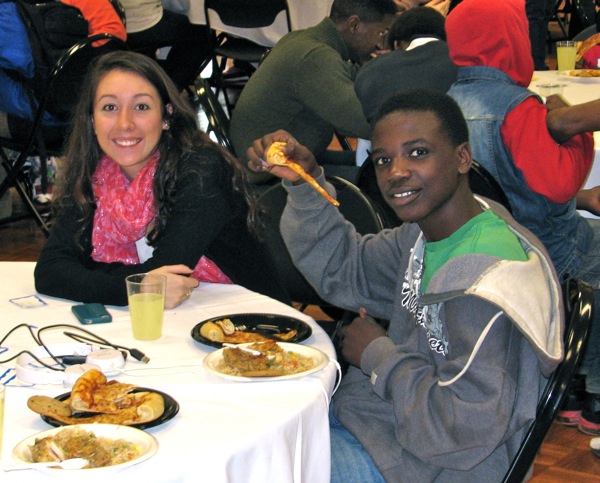
Assumption and ACE students share lunch.

To encourage the latter, Assumption College’s Community Service Learning Program hosted the kids of ACE on a recent fall Saturday. Three of the key organizers were CSL partnership coordinator Susan Hayes, a colleague who fuses passion and attention to detail as well as anyone I know, and ACE’s Amy Connery and Julia Kilgore; a former Assumption student, Kilgore owes her ACE career to seeds planted when she studied abroad in Africa and then built on that experience by volunteering at ACE in a CSL course herself. Under their leadership, more than 40 ACE kids bussed over in late morning, had lunch in Hagan, and heard the AC Director of Admissions, Mario Silva, discuss college and how to apply for it. The teenagers asked so many questions, we had to end the session just to start the tours, led by AC students. (The visitors then wound up at Kennedy Hall, where they performed various group activities.)

But that’s just one side of this story.

The other side leads us to Assumption business professor Catherine Pastille and how, thanks to her, ACE’s kids weren’t the only students learning something from this experience. The ACE day was only possible because Pastille, a new arrival on campus who has plunged fearlessly into service-based experiential learning, saw the chance for her Management 100 students to apply what they were learning to a real-life situation – and make a difference at the same time.

ACE’s Yawo flanked by Pastille and one of her students, Lauren Cranston.

Pastille explains her concept as follows:  “The CSL project gives the students an opportunity to make a positive contribution to the community and to experience and practice the four major management functions: planning, organizing, leading and controlling.  Planning begins with a compelling vision for whatever it is that we are trying to accomplish followed by creating a plan for how we are going to move ourselves from where we are to where we want to be. Organizing refers to analyzing all the tasks that need to be done, putting the right people in the positions where their strengths can be used, and then being sure they have the resources they need to shine. Leading is all about knowing your strengths and being able to motivate others and work with them to realize the vision. Finally controlling means we keep track of how well we are doing based on what we planned and what we want to achieve; and we use the info we gather to learn how to improve next time.”

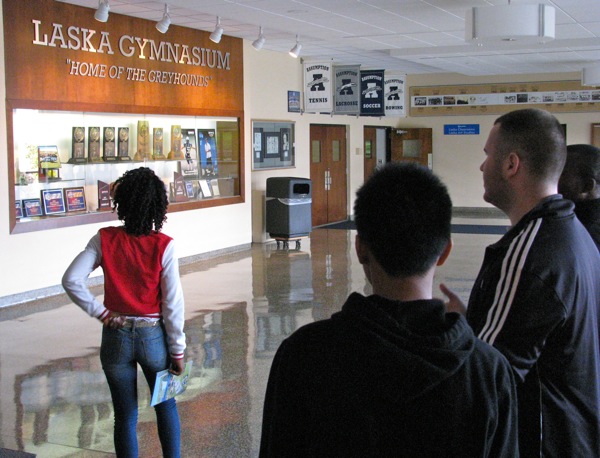
Students on tour take in the Home of the Hounds.

What ACE did for Assumption was to render the above series of often abstract educational goals into specific and concrete action, the hypothetical client you’ll only serve after you grade into the flesh and blood of these kids, with backgrounds so very different from that of the average AC student – and yet just as goofy and energetic and joyful as any teenager. Spontaneous energy abounded – but it was the culmination of a carefully planned month-long process.

One of my reasons for doing CSL is to provide students with experiences they’ll remember five years later.

Surely ACE’s day at Assumption did that for all the students, those in college – and those hoping to be.

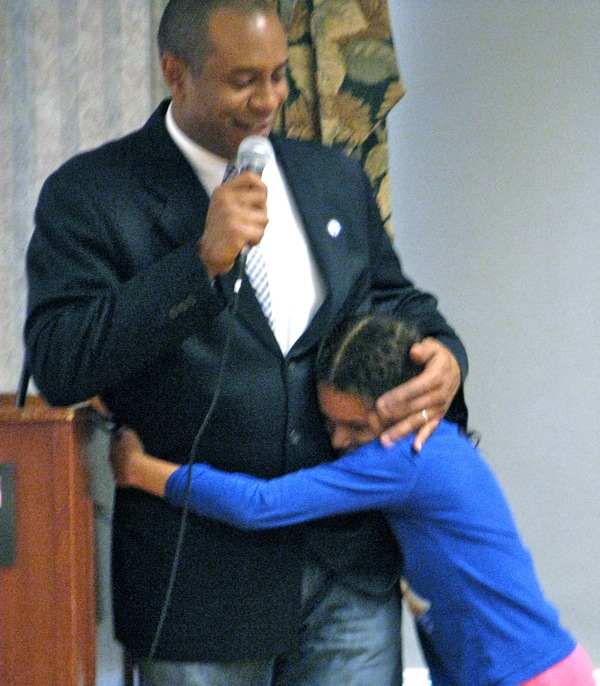
Silva with a surprise co-presenter — his daughter.

Bird feeders and ballot boxes

6 Nov

Red-bellied Woodpecker on the Election Day fence – or at least the balcony rail.

Not that I needed reminding, but I couldn’t help take it as a sign, the red-bellied woodpecker that settled on my bird feeder.

I don’t mean “sign” as in ominous omen. The black raven might have quoth “nevermore” in the “midnight dreary,” but this rare visitor’s plumage suggested something more positive – an action to be taken.

That message? “Get out of your easy chair and go vote, why don’t you?”

Yes, my woodpecker is more wordy than Poe’s crow, but my hallucinatory birds are more prose than poetry.

But, in case you’re wondering about now, there is a connection – my polling place is Broadmeadow Brook Audubon Wildlife Sanctuary. The first time I did so was four years ago, when, of course, Barack Obama won the presidency. Pulling up in front of the visitor center that morning, I felt like I had won, regardless of what my candidate went on to do. Instead of a dingy school, a line wove past a garden and into a bright sunlit lobby; I shared the voting space with a turtle in a terrarium. His head extended straight ahead, as still as death, not tipping whether he leaned to the left or the right.

Nor did my woodpecker indicate any particular political stance. There is that whole redhead/red state correlation, but then why is he in Massachusetts? Besides, the relish at which he was eating the feed makes me think that he thus supports redistribution of wealth, although he would prefer a rather unconventional currency for the payouts.  Furthermore, he’s far less monopolistic than the ubiquitous and greedy sparrows. The issue of sexual orientation when it comes to civil union? Well, is he even a he? I don’t rightly know.

The silliness of my musings was a welcome relief from the sobriety of this election morning. I woke up worried that we might move not closer to compassion today, but farther away. Then came another, more self-centered, observation – when it comes to the four-year measuring stick, it’s not only the state of the union that, as always, comes up short.

It’s also me.

While I work community service into every course I teach, that’s stuff I’m paid to do. Even with the occasional mission trip, I know I could do more volunteer work on my own time. Way more.

More to the point, like a lot of volunteers, except for election days, I don’t get directly involved in the political process. Even though I’m reasonably outgoing, I’m not one for door-knocking and phone banks, for sign-holding or street-marching – that’s not the work my disposition gravitates toward.

Which makes me like most people. I once heard a presenter at a conference cite a study showed that while volunteering in college makes students more likely to volunteer later in life, it doesn’t make people any more likely to vote. Asked why, the presenter speculated that volunteering was much more satisfying – you experienced a concrete result from your efforts. Your vote literally doesn’t make the difference in any election – unless you count committees – but volunteering does.

The problem comes when the mind’s camera pulls back from the tight shot of our personal action to the broader context. The truth is that what the government does matter – and in ways that dwarf our individual charitable acts. The persons and parties we choose on Election Day can work in a dynamic partnership to help people on the margins solve their own problems – or it can undercut everything we are doing now.

My larger problem unsolved, I could at least vote. I donned my own plumage – considerably duller than that of my feathered friend, although I do have a red cap – and headed to the Audubon. I stood in line by the butterfly bushes, breathed in the sweet mulch, shuffled past images of deer and birds. I bantered briefly with women at the ballot table – one of whom remembered me from Assumption – but the line was far too long for them to linger. They’d been volunteering since 6:30 a.m., and will be there until “it’s all over” that night.

Then I took my paper ballots and headed to the only open table, filled out my ballot and only then took in the bird poster above my station. I was surprised when I saw, of birds on all the posters in the voting places of the world, my very friend from this morning – or at least one of his/her relationships.

This one grasped the bottom of a feeder, tilting it with his weight, hanging on as if waiting to see what would happen next.

As for me, my most important political duty performed, I walked out the back door, passed below the feeders and wandered into the woods. The day was sunny but the air cold, still in the high 30s. Far more leaves below my feet than above my head. Winter coming on. Still, I smiled at the spanking new rope railings and plaques, the signs in both English and Braille, for sighted and blind alike. All done, I guessed, not by paid laborers, but devoted volunteers.

The weird thing is, somehow it mattered. Ohio might go blue or red that night, Florida might do whatever crazy thing Florida does … but either way I feel a little better not just for voting, but voting here.

Perhaps it’s all voting in the end, voting done year round – with our ballots, our hands, our feet.

Beaks? Not so sure.

Stone crossing at Broadmeadow Brook on a cold but sunny Election Day.

A Wendell Berry Kind of Day

27 Oct

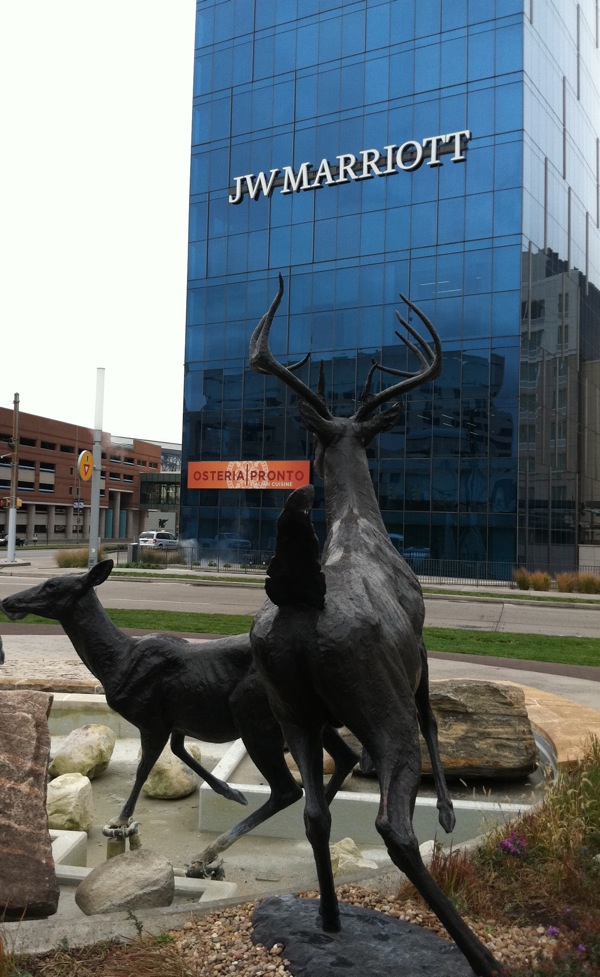
Eiteljorg antelope in ironic frolic against the big blue sky of … the Marriott.

I sally forth into a cool and drizzly Indianapolis, determined as usual to get past the antiseptic convention rooms and campus auditoriums of the academic conference – to connect in some superficial way with the city itself. But even that effort to delve deeper into Indianapolis points me to something bigger than Indianapolis. I wind up at the Eiteljorg Museum of American Indians and Western Art, filled with the art and crafts of the American West. Hours later, I return to my 11th floor hotel room with my head full of the vastness of the American West, the experiences I had earlier this year on the rolling wide open country of a South Dakota Indian reservation, the way Willa Cather described her protagonist in O Pioneers as taking comfort in the small place of humans amid the “vast operations of the universe.”

Striving to make the room’s writing desk my own, I try describing the view: “Lucas Oil Stadium to my left, the hotel dead ahead, the glassy curved blue 1000-something-room JW Marriott on my right, and in the middle the mysterious factory billowing steam and who knows what else into the atmosphere, has a chute as if it might’ve been a coal plant, who knows …” For obvious reasons, this effort ran out of steam; instead my eyes glided back toward the flat-screen TV, which I had set on something called the RELAX Channel – ironically, it screams its name in all caps, as if to say, “RELAX NOW, DAMN IT!” It’s a rotating series of images of Yosemite National Park in California: Granite domes and water falls and ponds reflecting peaks and sky and tree lines, courtesy of director Sterling Johnson.

How odd it is, all this mediation of the “here and now” with the “there and been”, and how each enriches the other. My May among the impoverished Sioux in South Dakota flows into my July visit to a Santa Barbara Chumash exhibit into my October visit to the Eiteljorg into this hotel cable service and its renderings of Yosemite. Sitting between the televised pictures of Yosemite and the real-time city panorama of Indianapolis, I write that this whole meditation is “even more ironic than I’m aware of. And now a long-haired, perhaps Native American, perhaps not, plays some kind of flute with the mountains in background, reminding me of the Wendell Berry comment about how the tiny figures in Chinese landscape paintings are a more accurate depiction of our place in creation” than scenes devoid of humans. It seemed impossible, I noted, to be in one place at a time; everything connects to something else, every one to someone else. As I rose from my laptop to put on my conference shirt and tie, I couldn’t decide whether this was a good or bad thing.

As it turned out, I was right about one thing – there was more irony, and more connections, awaiting me on this day. But even so, I wasn’t quite prepared for how powerfully my private pre-conference morning would unfold into my professional appearance at the University of Indianapolis, host of a Lilly Fellowship Conference called “Incorporating Service: The Body At Work.”

It was going to be a Wendell Berry kind of day.

Within my first two hours, I sat next to a fellow Southerner about a decade older than me, a remarkably open gentleman with whom I slipped easily into probing conversation about the painful paradox of Christianity and racism back during the Civil Rights Movement. He volunteered that he didn’t confront his own racism head-on until seminary, and that even now he has to root out vestiges of that upbringing. This somehow brought up Wendell Berry’s book The Hidden Wound, about much the same topic; when he confessed to now knowing Berry, the guy on the opposite side of him and I joined in singing the praises of the eloquent essayist and poet. Berry, after all, not only writes with powerful clarity and wide range, but argues out of deep convictions. He defends small farms and sustainable living, a prophet speaking against a vast capitalist culture that has molded us into its image in more ways than we can count.

Then, an hour later, I saw Wendell Berry.

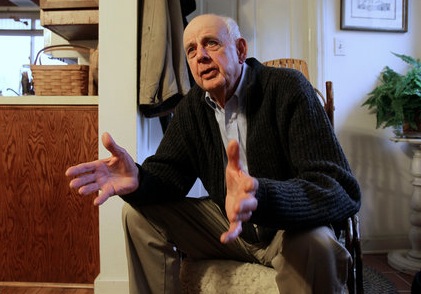
Wendell Berry (Ed Reinke/Associated Press)

Well, I saw a photo of him on Power-Point representation – although not the one above. It was part of Jeff Bouman’s overview of the history of service at America’s religiously affiliated colleges. St. Wendell, as a friend of mine used to call him, seemed older but robust. His picture was accompanied by the phrase “It All Turns on Affection,” The phrase was the title of the talk he gave at the invitation of the National Endowment of the Humanities, which honors one scholar a year with the opportunity to give the Jefferson Lecture in the Humanities lecture in Washington D.C.

Later I will read Berry’s entire lecture on-line and discover the basis of the title, a seemingly odd one for a lecture so preoccupied with agricultural economy.

Berry puts it this way:

“The term ‘imagination’ in what I take to be its truest sense refers to a mental faculty that some people have used and thought about with the utmost seriousness. The sense of the verb ‘to imagine’ contains the full richness of the verb ‘to see.’ To imagine is to see most clearly, familiarly, and understandingly with the eyes, but also to see inwardly, with ‘the mind’s eye.’ It is to see, not passively, but with a force of vision and even with visionary force. To take it seriously we must give up at once any notion that imagination is disconnected from reality or truth or knowledge. It has nothing to do either with clever imitation of appearances or with ‘dreaming up.’ It does not depend upon one’s attitude or point of view, but grasps securely the qualities of things seen or envisioned.

“I will say, from my own belief and experience, that imagination thrives on contact, on tangible connection. For humans to have a responsible relationship to the world, they must imagine their places in it. To have a place, to live and belong in a place, to live from a place without destroying it, we must imagine it. By imagination we see it illuminated by its own unique character and by our love for it. By imagination we recognize with sympathy the fellow members, human and nonhuman, with whom we share our place. By that local experience we see the need to grant a sort of preemptive sympathy to all the fellow members, the neighbors, with whom we share the world. As imagination enables sympathy, sympathy enables affection. And it is in affection that we find the possibility of a neighborly, kind, and conserving economy.”

Brilliantly reasoned, with its intelligence as emotional as it is intellectual. I reminded me of the poster I bought when I moved to Massachusetts to start my new life as a teacher at Assumption College – one proclaiming, “If we fail now, it will be a failure of the imagination.” Which, of course, informs both the manner in which we serve others – do we imagine what the situation looks like from their perspective before we impose our answers onto them – but whether we bother to serve at all. As usual, Berry says it better: “The word ‘affection’ and the terms of value that cluster around it—love, care, sympathy, mercy, forbearance, respect, reverence—have histories and meanings that raise the issue of worth. We should, as our culture has warned us over and over again, give our affection to things that are true, just, and beautiful. When we give affection to things that are destructive, we are wrong.” (This strikes me as particularly instructive when it comes time to vote.)

Berry observes that this sympathetic imagination is sometimes hard to achieve, and for understandable functional reasons. “It is a horrible fact that we can read in the daily paper, without interrupting our breakfast, numerical reckonings of death and destruction that ought to break our hearts or scare us out of our wits. This brings us to an entirely practical question:  Can we—and, if we can, how can we—make actual in our minds the sometimes urgent things we say we know?” But, as he concludes, “We don’t have to live as if we’re alone.”

Even though presenter Jeff Bouman didn’t quote all of the above in his talk, I can see its truth in the story I lived out in Indianapolis. The irony-filled spiritual interplay of imagination and affection unfolded through the rest of my day in Indianapolis: Jeff Bouman’s talk, a dinner theater one-act play, and an extraordinary number of spiritual and intellectual conversations.

Some of those encounters hit me where I lived – or, at least, where I should be living. I started to get to the latter place that evening, when the conference introduced me to Taize-styled vespers – a service that emphasized silent meditation punctuated by occasional readings and repeated sung phrases, climaxed by us passing of the flame from one candle to another, until we were all meditating over our individual fire. Each person left as they saw fit, so the service did not so much end as fade – and I surprised myself by being one of the last to leave. Instead, I sat and soaked in the cumulative effect of the day, reveling in St. Wendell and the American West and the power of imaginative affection in the face of the vastness.

Antelope outside Eiteljorg Museum.

On Sam Wells and the Importance of Prepositions

23 Oct

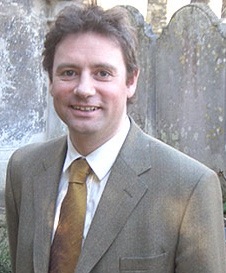
Sam Wells: vicar, author, preacher. 

Standing before an almost packed auditorium at the University of Indianapolis last Saturday, Sam Wells asked us to journey halfway around the globe, to the Saharan desert where, in Michael Ondaatje’s The English Patient, Lazlo faces a seemingly possible choice – staying with his injured lover until she dies or hike three days to Cairo in search of help.

Wells, a social activist Anglican vicar and author, let Lazlo’s difficult choice linger over his audience, gathered for “Incorporating Service: The Body at Work,” the 22nd annual national conference for the Lilly Fellows Program in Humanities and the Arts. Thanks to the Lilly Fellows’ emphasis on encouraging a place for Christian themes in otherwise secular academic disciplines, the audience ranged from grad students and professors to provosts and chaplains. “Yesterday we heard a talk,” a fellow participant told me over breakfast, referring to a superb conference-opening historical overview of American collegiate service by Calvin College’s Jeff Bouman. “This morning we’re going to hear a sermon.”

My breakfast companion was absolutely correct. Wells’ talk took us to the depths of two profoundly personal reasons why we do service – and why one is both more satisfying and harder than the other. Wells’ irresistible logic and eloquence was complemented by his English accent and a vaguely Colin Firth-ish appearance, and while he dared singing with comic badness to illustrate his points, the heart of his talk lay in three simple hypothetical situations.

Wells asked us to imagine (1) buying a Christmas gift for the “most difficult” person in our family, (2) hosting the extended family for Thanksgiving, and (3) hustling to drop off meals and gifts for the poor during the holidays. One thing all three have in common is disappointment: The gift falls short and doesn’t fix the relationship, the dinner exhausts the host who is too busy pleasing people to enjoy their company, and the gifts and meals feels impersonal and unsatisfying.

The other thing they have in common, Wells pointed out, is the preposition “for.” Being a vicar, of course, Wells approves of doing things for others. But ultimately Wells argued for service built around a different preposition: “with.” The emptiness in all three situations stems from the failure to be with the difficult family member, with the guests, to be with the poor. So why do we choose instead to settle for only doing things for others? His answer: “For” is often easier. Building relationships is more challenging, both in terms of time and in terms of energy. Just as it’s easier for organizations to do things for this or that group than consulting with said group to find out what’s truly needed. So to Wells, this distinction has implications not only for our personal, individual acts of service, but also for how organizations address the needs of larger groups.

As if this was not enough to chew on, Wells frames all of this in terms of a larger existential question – or, rather, two questions. Is the central question of human existence to throw off the limitations of mortality, or is the central question of the human predicament instead isolation? If you say it’s mortality, your service is likely  to join a solution-oriented culture in which we want the less fortunate to have the same opportunities to throw off limitations – and you’re likely to throw yourself into acquiring skills that help solve those problems for others. If, on the other hand, the big question is isolation, you have to accept the considerably more challenging duty of being with people, facing problems that may have no easy solution which you can then congratulate yourself for helping solve. He argued that the gospel – from Jesus being sent to be with us to the Trinity as the “embodiment of with” – is ultimately centered on the latter.

Vespers altar at U. Indy chapel.

Besides, he suggested, we still haven’t exactly licked mortality. As he put it with  deliciously dry humor, “As eternity is rather extensive, anything short of that is going to seem inadequate.” And while Wells acknowledges that we should still do things for people, letting that become the dominant mode of our service can create an isolation that turns our earthly lives into a “kind of hell.”

Afterward, I would thank Wells in the lobby for deepening the “for-with” distinction I had explored in an earlier blog about Rev. Murray Branch, the pastor at Dexter Avenue-King Memorial Church in Montgomery, Alabama. He warned our fledgling Habitat for Humanity affiliate that we shouldn’t say we’re building houses for people, but with them – affirming the dignity of all in a spirit of partnership. Wells agreed: As it turned out, he actually named Habitat as a model of “with” service in a Living Without Enemies: Being Present in the Midst of Violence, a book he co-authored with Marcia A. Owen.

As for the fictional Lazlo,he of course acts out of the mortality model, as Wells noted in his conclusion. Lazlo abandons his lover to face the prospect of death alone, only to return to find her dead. He then tries to fly her body back to Cairo, only to crash and injure himself – after which, Wells notes, he is lucky enough to find a nurse who is willing to do what he failed to do, face death with him.